About us
የምድሪቱ ልምላሜ ለህዝቡ ፈውስ ነው
Who We Are
Established in 2019, FE has been implementing its environmental restoration program namely “Restoring the Environment and Equipping the Rural Families Program”.
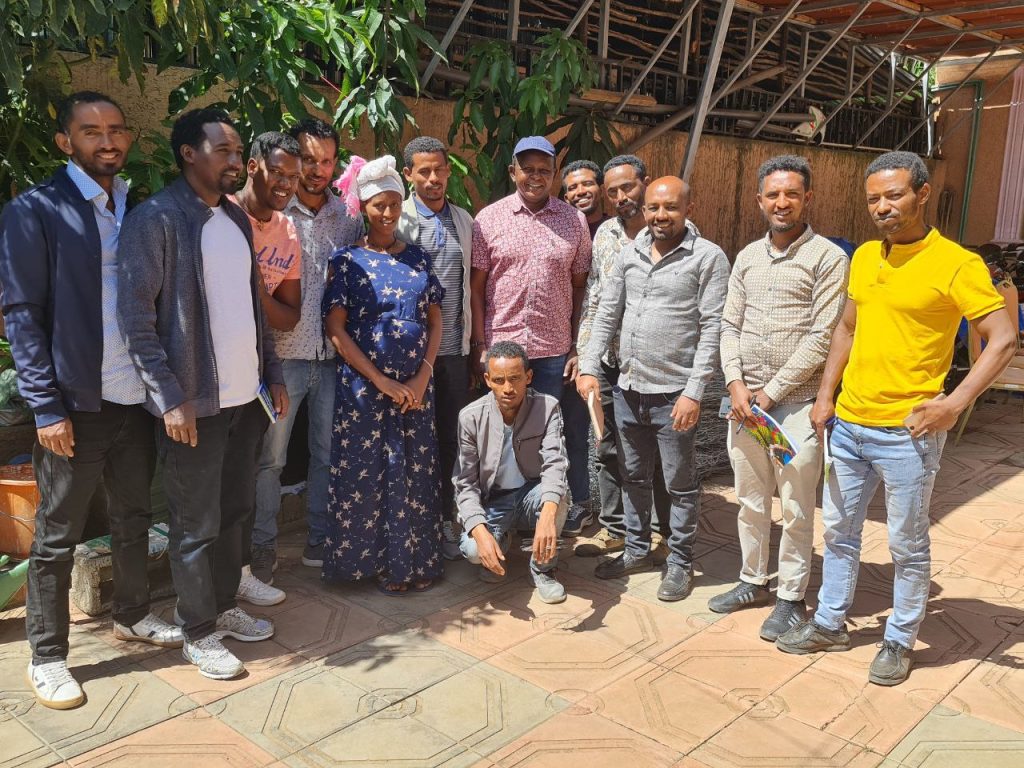
We work as a team of over 34 full-time co-workers, 33 active volunteers, part-time workers, the vast majority of whom come from the contexts where we work. Our team is inspired by the shared transformational principles and objectives set out by Global PWP’.
- We value and respect our partners
- We act with compassion towards rural poor
- We are stewards of All creation
- We work in unity
Our Shared Program Philosophy
Our Shared Development Programs
THREE PARTS – ONE PROGRAM
Investment in development areas including Water Supply, Energy, Education, health, governance, economics, infrastructure, etc are important for community holistic development. Although we recognize the importance of development in all these areas, we choose to focus on three: spiritual, economic, and environment. We do this because we believe we are able to make better use of our resources and expertise, and therefore have a greater measurable impact. We also believe that these three areas impact or are directly related to many of the other areas. For example, the quality of water supply is influenced by the quality of the environment.
How We Work
Believing the inseparability of improving environmental conditions and rural household incomes, the development approach of Floresta Ethiopia intermingles environmental restorations with livelihood improvement interventions focusing on the below three areas.
Watershed Model
Floresta Ethiopia engages at a sub-watershed level because it believes watershades are the essential units for creating and measuring sustainable change. The watershed unit inherently promotes expanding the scale of impact in geographic and practical ways because it connects interventions at household level with intra and inter-communal, national and international issues of sustainable care for the environment.
The physical reality of a shared water catchment integrates environmental stewardship values with program investments in trees, soil improvement, livelihoods development and structural relationships within a defined geographic unit.
WHY THE WATERSHED MODEL?
● Everything in a watershed is connected ecologically, hydrologically, economically
● Ecological and human focus, deep impact on households and the ecosystem
● Human activity and watershed boundaries often correspond
● Allows us to focus our work & observe and compare our impact
The span of time we work in a specific watershed depends on a few factors:
○ The number of years it takes to achieve the Participant Saturation Target
○ The number of years it takes to complete the Environmental Core Curriculum (ECC)
○ The Impact Evaluation Results, reflect the speed at which the population is experiencing change
○ When the population is ready to Graduate from the Program
By its development approach, Floresta Ethiopia will hand over a watershed when the communities are equipped to progress beyond meeting their basic needs and effectively steward natural resources sustainably.